Category: Software Engineering

  • Background Job Processing: Just Because You Can Do It in the Request Doesn’t Mean You Should

    Background Job Processing: Just Because You Can Do It in the Request Doesn’t Mean You Should

    Early in my career, I had a simple approach.

    A user submitted a request, and the API did everything before returning a response.

    • Save the data.
    • Send an email.
    • Generate a PDF.
    • Upload files.
    • Notify other systems.

    The endpoint worked.

    But it was also slow.

    Then I realized something important:

    Not every task belongs in the request-response cycle.

    Some tasks don’t need to finish before the user receives a response.

    That’s where background job processing becomes valuable.

    What Is Background Job Processing?

    A background job allows your application to offload long-running or non-critical work to execute after the request has completed.

    Instead of making the user wait, the API responds quickly while the background worker processes the remaining tasks.


    What Should Run in the Background?

    Typical examples include:

    • Sending emails or SMS messages.
    • Generating PDF or Excel reports.
    • Processing uploaded files.
    • Creating thumbnails or resizing images.
    • Synchronizing data with external systems.
    • Publishing events or notifications.

    These operations don’t usually need to block the user’s request.


    Benefits

    • Faster API response times.
    • Better user experience.
    • Improved scalability under heavy load.
    • Better resilience when external services are slow.

    Things to Consider

    Background jobs introduce new responsibilities.

    Think about:

    • Retry policies.
    • Error handling.
    • Monitoring and logging.
    • Idempotency to avoid duplicate processing.
    • Queue management.

    Moving work to the background doesn’t remove complexity—it moves it to a different part of the system.


    Common Tools in .NET

    Depending on your requirements, you might choose:

    • Hangfire
    • Quartz.NET
    • Azure Functions
    • Worker Services
    • Message queues such as RabbitMQ or Azure Service Bus

    The best tool depends on your application’s architecture and operational needs.


    Final Thoughts

    One lesson changed how I design APIs:

    Respond as soon as you’ve completed the work the user actually needs.

    Everything else should be evaluated to see whether it belongs in a background job.

    Fast APIs aren’t always the ones that do less work.

    They’re often the ones that do the right work at the right time.
  • How Do You Work Effectively with Cross-Functional Teams?

    How Do You Work Effectively with Cross-Functional Teams?

    Building great software isn’t just about writing clean code.

    It’s about collaborating with people from different disciplines—product managers, UI/UX designers, QA engineers, DevOps engineers, business analysts, and stakeholders.

    As a software engineer, your success depends not only on technical skills but also on how well you work with cross-functional teams.

    1. Start with a Shared Understanding

    Before writing code, make sure everyone agrees on:

    • The business goal
    • The user problem
    • The expected outcome
    • Success criteria

    When the team shares the same vision, misunderstandings are reduced.


    2. Communicate Clearly

    Avoid assuming everyone understands technical jargon.

    Instead:

    • Explain technical decisions in simple language.
    • Ask questions to clarify requirements.
    • Share updates proactively.

    Good communication prevents costly rework.


    3. Involve the Right People Early

    Don’t wait until development is complete to involve other teams.

    For example:

    • Discuss feasibility with DevOps before deployment.
    • Review designs with UI/UX before implementation.
    • Collaborate with QA while defining acceptance criteria.

    Early collaboration saves time later.


    4. Respect Different Perspectives

    Every role brings unique expertise.

    • Product Managers focus on business value.
    • Designers focus on user experience.
    • QA focuses on quality and edge cases.
    • DevOps focuses on reliability and deployment.
    • Developers focus on technical implementation.

    Listening to each perspective leads to better decisions.


    5. Handle Feedback Professionally

    Code reviews, testing feedback, and design changes are opportunities to improve—not personal criticism.

    A collaborative mindset builds trust within the team.


    6. Be Transparent About Risks

    If you identify:

    • Technical debt
    • Performance concerns
    • Security risks
    • Timeline impacts

    Raise them early.

    Surprises late in the project are much harder to manage.


    7. Focus on the Shared Goal

    Cross-functional collaboration isn’t about proving one team is right.

    It’s about delivering value to users.

    When disagreements arise, return to the shared objective and make decisions based on what’s best for the product.


    Final Thoughts

    The best software isn’t built by individual developers—it’s built by teams that communicate, collaborate, and trust one another.

    Strong technical skills may help you become a good developer.

    Strong collaboration skills help you become a great engineer.

  • ম্যানেজার হঠাৎ বললেন, “এই Project-এর Estimation করে দেন!” — তখন কী করবেন?

    ম্যানেজার হঠাৎ বললেন, “এই Project-এর Estimation করে দেন!” — তখন কী করবেন?

    সকালের Stand-up Meeting শেষ।

    হঠাৎ ম্যানেজার বললেন,

    “Faiz, এই নতুন Project-এর একটা Estimation আজকেই লাগবে।”

    প্রথম প্রতিক্রিয়া কী হবে?

    অনেকেই তাড়াহুড়ো করে একটা সংখ্যা বলে দেন—

    “মনে হয়… ২ সপ্তাহ লাগবে।”

    কিন্তু একজন অভিজ্ঞ Software Engineer জানেন,

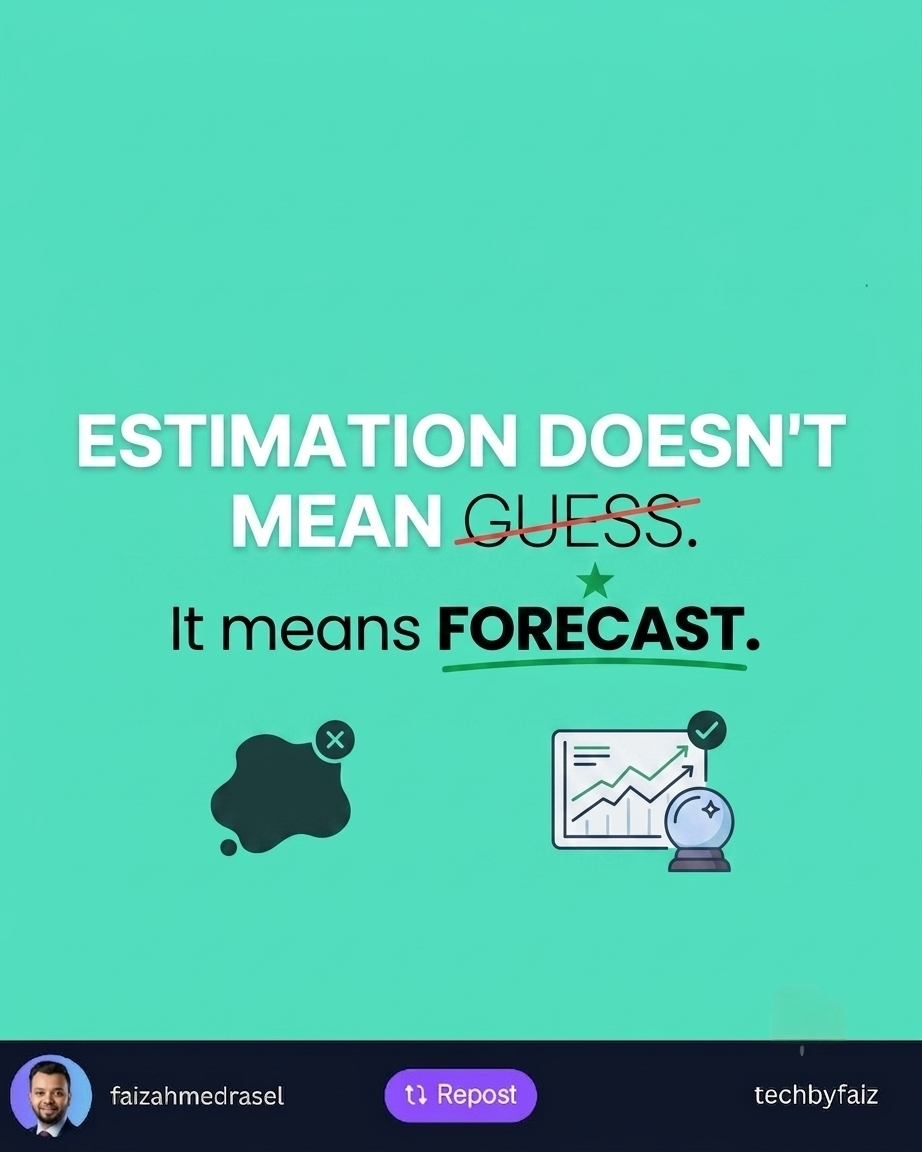
    Estimation মানে Guess করা নয়।

    Estimation মানে হলো, বর্তমান তথ্যের ভিত্তিতে একটি যৌক্তিক পূর্বাভাস (Forecast)।


    আমি কীভাবে শুরু করি?

    প্রথমেই আমি একটি প্রশ্ন করি—

    Requirement কি পুরোপুরি পরিষ্কার?

    যদি Requirement পরিষ্কার না হয়, তাহলে কোনো Estimation-ই নির্ভুল হবে না।


    এরপর Project-টাকে ছোট ছোট অংশে ভাগ করি

    একটি বড় Feature-এর Estimation করা কঠিন।

    কিন্তু যদি এটিকে ভাগ করি—

    • Authentication
    • Database Design
    • API Development
    • Frontend Integration
    • Unit Testing
    • Deployment

    তাহলে Estimation অনেক বাস্তবসম্মত হয়।


    Unknown বিষয়গুলো আলাদা করি

    সব Project-এই কিছু Unknown থাকে।

    যেমন—

    • Third-party API Integration
    • নতুন Technology
    • Client-এর পরিবর্তিত Requirement

    এসব ঝুঁকি (Risk) আগে থেকেই চিহ্নিত করলে Estimation আরও বাস্তবসম্মত হয়।


    Buffer রাখতে ভুলবেন না

    একটি Project কখনোই শুধুমাত্র Coding নয়।

    এর সাথে থাকে—

    • Code Review
    • Bug Fix
    • Testing
    • Meeting
    • Deployment
    • Production Support

    শুধু Coding Time ধরে Estimation করলে প্রায়ই Deadline মিস হয়।


    সবচেয়ে বড় ভুল

    অনেক সময় আমরা Pressure-এর কারণে বলি—

    “হ্যাঁ, হয়ে যাবে।”

    কিন্তু বাস্তবে Requirement না বুঝে দেওয়া Estimation পুরো Team-এর জন্য সমস্যার কারণ হতে পারে।

    একজন Professional Engineer প্রয়োজনে বলেন—

    “আমি Requirement Review করে আজ বিকেলের মধ্যে একটি বাস্তবসম্মত Estimation জানাচ্ছি।”

    এটা দুর্বলতা নয়, বরং Professionalism।


    আমার শেখা একটি বিষয়

    বছরের পর বছর কাজ করে একটি বিষয় বুঝেছি—

    ভুল Estimation দেওয়ার চেয়ে, একটু সময় নিয়ে সঠিক Estimation দেওয়া অনেক ভালো।

    কারণ Deadline মিস করলে শুধু Project নয়, Team-এর বিশ্বাসও ক্ষতিগ্রস্ত হয়।

    শেষ কথা

    Estimation কোনো প্রতিশ্রুতি (Promise) নয়।

    এটি হলো একটি Forecast, যা বর্তমান তথ্যের উপর ভিত্তি করে তৈরি হয়।

    আর একজন ভালো Software Engineer-এর কাজ শুধু দ্রুত উত্তর দেওয়া নয়, বরং তথ্যভিত্তিক এবং বাস্তবসম্মত উত্তর দেওয়া।